Master the Betjili aviator strategy 2026: Proven Tips to Maximize Your Wins
On This Page
- Understanding the Aviator Game Mechanics in 2026
- The Core Betjili Aviator Strategy: Bankroll and Bet Sizing
- Advanced Betting Patterns for Aviator 2026
- Bonus Optimization and Platform Comparison for Aviator Players 2026
- Step-by-Step Guide: Executing Your First 100 Rounds
- Pros and Cons of Different Aviator Approaches
- Frequently Asked Questions
crash games have taken the iGaming world by storm, and the betjili aviator strategy you choose can mean the difference between a fat bankroll and a busted session. Aviator isn't a slot where you mindlessly press spin — it's a real-time decision engine where every second counts. The multiplier climbs, the plane flies, and your job is to cash out before it vanishes. Simple concept. Brutal execution. This guide breaks down everything you need to dominate the skies in 2026, from bankroll math to bonus hunting, bet sizing to behavioral discipline.
Understanding the aviator game Mechanics in 2026
Aviator is provably fair. That single fact changes everything about how you should approach it. Unlike traditional casino games where a black-box RNG decides your fate, Aviator's crash point is generated using a cryptographic seed that you can verify after each round. The server seed, client seed, and nonce combine to produce a result that neither you nor the operator can manipulate. This transparency is why crash games have exploded in popularity across the iGaming space — players trust what they can audit.
The core mechanic is deceptively simple. A multiplier starts at 1.00x and climbs upward. At some random point, the plane "flies away" and the round ends. If you cashed out before that moment, you win your stake multiplied by whatever the multiplier was at the instant you hit the button. If you didn't, you lose your stake. The RTP (Return to Player) sits at approximately 97%, which is competitive — better than most slots and comparable to European roulette.

Here's the mathematical reality that most players ignore: the probability of the multiplier reaching a certain level follows a specific distribution. Roughly speaking:
| Target Multiplier | Approximate Hit Probability |
|---|---|
| 1.20x | ~83% |
| 1.50x | ~67% |
| 2.00x | ~51% |
| 5.00x | ~20% |
| 10.00x | ~10% |
| 100.00x | ~1% |
These numbers aren't exact — the provably fair algorithm produces slight variations — but they're close enough to guide your decisions. A 2.00x cash out gives you roughly a coin-flip chance of success. A 10.00x target means you'll lose nine out of ten rounds on average. Understanding this distribution is the foundation of any serious approach to the game.
The community feedback on betjili's Aviator implementation has been overwhelmingly positive. Players consistently praise the smooth interface, the speed of round transitions, and the reliability of the cash-out function — which matters enormously when you're trying to lock in profits at 1.30x and every millisecond counts. Lag kills crash game strategies faster than greed does.
One critical mechanic to understand: you can place two simultaneous bets per round. This opens up hybrid strategies where one bet serves as a safety net (low target, high hit rate) while the other chases bigger multipliers. We'll explore this in depth later, but file it away now — dual-bet functionality is the single most underutilized feature among casual Aviator players.
Top Platforms for Aviator in 2026
betjili
Up to $500 Bonus
- 100% Crash Game Contribution towards rollover
- Instant, reliable cash-out function
- Fast withdrawal processing
Bet365
Up to $200 Bonus
- Strong community rating and trust
- Varies by promo for rollover contribution
10CRIC
100% Crash Contribution
- Moderate wagering requirements
- Positive community feedback
The Core Betjili Aviator Strategy: Bankroll and Bet Sizing
Your bankroll is your ammunition. Treat it like a professional gambler treats a trading account — with risk management protocols, position sizing rules, and stop-loss discipline. The biggest mistake Aviator players make isn't picking the wrong multiplier target. It's betting too large relative to their bankroll, so that a normal losing streak wipes them out before the math has a chance to work.
The house edge doesn't kill players. Poor bankroll management does. The 3% RTP advantage the casino holds is noise compared to the 97% bankroll advantage that bad sizing hands them.
Here's the golden rule: never risk more than 2-5% of your total bankroll on a single round. If you've got 1,000 credits to play with, your bet size should be between 20 and 50 credits. This sounds conservative — and it is — but crash games are high-variance by nature. You will encounter losing streaks. The question isn't whether they'll happen, but whether you'll survive them.
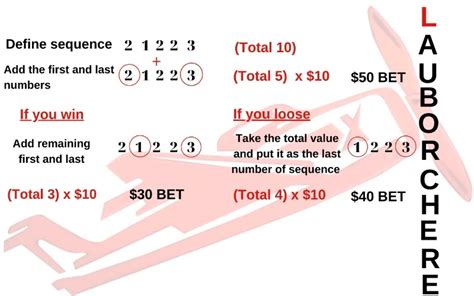
Let's run the numbers on a concrete scenario. Say you're targeting 2.00x with a 51% hit rate. The probability of losing five rounds in a row is approximately 3.6%. That's not rare — it'll happen roughly once every 140 rounds. If you're betting 20% of your bankroll per round, five consecutive losses leave you with about 33% of your starting balance. If you're betting 3% per round, you're down 15% and still very much in the game. The difference between recovery and ruin is entirely about position sizing.
Establishing Your 2026 Bankroll Framework
Start by defining three numbers before you ever place a bet:
Total bankroll
The absolute maximum you're willing to deposit and potentially lose for your Aviator sessions this month.
Session bankroll
A fraction of your total bankroll (typically 20-30%) allocated to a single playing session.
Per-round bet size
2-5% of your session bankroll, adjusted based on your target multiplier and risk tolerance.
A player with a 5,000-credit monthly bankroll might allocate 1,500 credits per session and bet 30-75 credits per round. This framework ensures that even a catastrophic session leaves you with ammunition for next time.
The Kelly Criterion Applied to Aviator
For mathematically inclined players, the Kelly Criterion offers a formula for optimal bet sizing:
Kelly % = (bp - q) / b
Where b is the net odds received on the wager (your target multiplier minus 1), p is the probability of winning, and q is the probability of losing (1 - p).
For a 2.00x target with 51% hit probability:
- b = 1 (you win 1x your stake on top of getting it back)
- p = 0.51
- q = 0.49
- Kelly % = (1 × 0.51 - 0.49) / 1 = 0.02 or 2%
Full Kelly suggests 2% of your bankroll per bet at a 2.00x target. Most professionals use fractional Kelly (half or quarter Kelly) to reduce variance and account for the fact that real-world conditions differ from theoretical models. Half-Kelly at 1% per round is extremely conservative but virtually eliminates risk of ruin.
The beauty of the Kelly approach is that it scales. As your bankroll grows, your bet size grows proportionally. As it shrinks, your bets shrink, protecting what remains. It's a self-regulating system that mathematically prevents the death spiral of chasing losses with oversized bets.
Advanced Betting Patterns for Aviator 2026
Two bets. Two targets. One strategy. The dual-bet feature is where Aviator transforms from a simple guessing game into a nuanced strategic exercise. Instead of putting your entire stake on one multiplier target, you split your risk across two cash-out points — one conservative, one aggressive.
The 1.30x / 5.00x Hybrid
This is the workhorse strategy for serious Aviator players in 2026. Here's how it works:
Bet 1 (Safety)
70% of your round stake, targeting 1.30x
Bet 2 (Hunter)
30% of your round stake, targeting 5.00x or higher
The safety bet hits approximately 77% of the time. When it hits, it returns 1.30x on 70% of your stake, which is 0.91x of your total round stake. Your hunter bet loses on those rounds, so your net return is 0.91x - 0.30x = 0.61x. You're profitable on 77% of rounds.
When both bets hit (roughly 20% of the time), your return is 0.91x + (5.00 × 0.30) = 0.91 + 1.50 = 2.41x. That's a substantial win that more than compensates for the losing rounds.
When neither hits (roughly 23% of the time), you lose your full stake. But because the safety bet catches most rounds, your losing streaks are short and survivable.
The Martingale Trap
Many players arrive at Aviator from roulette and immediately deploy a Martingale progression — doubling after each loss. Don't. The Martingale is mathematically flawed in any context, but it's especially dangerous in crash games where the hit rate at common targets (1.50x, 2.00x) is barely above 50%.
Here's what happens: you start betting 10 credits at 2.00x. You lose. You bet 20. You lose. You bet 40. You lose. You bet 80. You lose. You bet 160. You win 320. Great — you've recovered your 10+20+40+80+160 = 310 credits and profited 10. But you've risked 310 credits to win 10. And if that fifth bet had lost, you'd be down 310 and needing to bet 320 — which may exceed your bankroll or the table limit.
The community sentiment on Martingale in Aviator is clear: it works until it doesn't, and when it doesn't, it's catastrophic. Players who've been around the crash game scene long enough have seen the same story play out hundreds of times.
The Auto Cash-Out Discipline
Human reaction time is approximately 200-250 milliseconds. Aviator rounds can crash in under a second. If you're manually cashing out, you're already at a disadvantage. Auto cash-out is non-negotiable for serious players.
Set your auto cash-out at your predetermined target before the round starts. This removes emotional decision-making, eliminates reaction time disadvantage, and forces you to commit to your strategy rather than second-guessing in the moment. The number of players who've watched a 3.00x multiplier, thought "just a little more," and then watched the plane fly away at 3.02x is incalculable. Auto cash-out prevents this self-destructive pattern.
Reading Multiplier Patterns (and Why You Shouldn't)
Aviator's provably fair system means each round is independent. The crash point of round 47 has zero statistical relationship to the crash point of round 48. There are no patterns to read. No hot streaks to ride. No cold streaks to avoid.
Yet the Aviator interface displays recent results, and many players obsess over them. "It hasn't hit above 5x in 20 rounds, so it's due!" This is the gambler's fallacy — the mistaken belief that independent events are somehow connected. They're not. The algorithm doesn't know what happened last round. Each crash point is freshly generated from cryptographic inputs.
The only legitimate use of historical data is verifying the provably fair system. If you suspect something is off, you can check the server seed hash against results. But for strategy purposes, history is noise. Your strategy should be the same whether the last ten rounds all crashed at 1.01x or all went to 50x.
Bonus Optimization and Platform Comparison for Aviator Players 2026
Bonuses can make or break your Aviator profitability. The 97% RTP means that over infinite rounds, you'll lose 3% of your total wagered amount. Bonuses — deposit matches, cashback, free bets — can shift that math in your favor. A 10% cashback on losses effectively turns a 97% RTP game into a 97.3% RTP game. A well-structured deposit bonus with favorable rollover terms can push you into positive expected value territory.
Understanding Rollover Requirements
The single most important metric in any casino bonus is the wagering requirement (also called rollover or playthrough). This is the multiple of the bonus amount you must bet before you can withdraw winnings derived from it. A 100-credit bonus with a 20x rollover means you must place 2,000 credits worth of bets before the bonus converts to withdrawable cash.
For Aviator players, rollover is a double-edged sword. On one hand, Aviator's fast pace means you can clear rollover requirements quickly — a player betting 50 credits per round at 2.00x targets can cycle through thousands of credits in an hour. On the other hand, that same speed means you're exposed to the house edge more times per hour than a slots player.
The key is finding bonuses with low rollover multiples (ideally 15x or below) and confirming that crash games like Aviator contribute 100% toward the requirement. Some operators exclude crash games or weight them at 10-50%, which dramatically reduces their value.
Platform Comparison: Where to Play Aviator in 2026
| Platform | Aviator RTP | Bonus Rollover | Crash Game Contribution | Community Rating |
|---|---|---|---|---|
| betjili | 97% | Competitive | 100% | Highly positive |
| Bet365 | 97% | Industry standard | Varies by promo | Strong |
| Betway | 97% | Moderate | 50-100% | Good |
| 10CRIC | 97% | Moderate | 100% | Positive |
| 1xBet | 97% | High | 100% | Mixed |
betjili stands out for Aviator players because of the combination of full crash game contribution toward rollover, competitive bonus terms, and the community-validated reliability of the cash-out function. When you're running a tight strategy where every percentage point matters, these factors compound. A platform that weights Aviator at 50% toward rollover effectively doubles the amount you need to wager to clear a bonus — which means twice the exposure to the house edge.
Players consistently report that betjili's withdrawal processing is fast, which matters for Aviator players who may want to lock in session profits rather than cycling them back into play. The community feedback on bonus clarity has been overwhelmingly positive — terms are stated upfront, and the rollover tracking is visible in real-time.
Ready to Put Your Strategy to the Test?
Join betjili today and claim your welcome bonus to start your first 100 rounds with a boosted bankroll.
START WINNINGCashback: The Aviator Player's Best Friend
Cashback offers are structurally superior to deposit bonuses for crash game players. Here's why: deposit bonuses require you to wager a specific multiple before unlocking, which means you're forced to play more than your strategy might dictate. Cashback simply returns a percentage of your net losses over a period — typically weekly or monthly — with no additional wagering requirement.
A 15% weekly cashback means that if you lose 1,000 credits over the week, 150 credits are returned to your account. This effectively reduces the house edge from 3% to 2.55% — a 15% improvement in your expected value. For a strategy built on grinding small edges at low multipliers, cashback is the single most valuable promotion available.
Step-by-Step Guide: Executing Your First 100 Rounds
Theory without execution is worthless. Here's a concrete, step-by-step protocol for your first 100 rounds of Aviator using the dual-bet framework. This assumes a 1,000-credit session bankroll and a conservative risk profile.

Step 1: Set Up Your Session Parameters
Before the first round, configure your auto cash-out for both bets:
- Bet 1: 35 credits, auto cash-out at 1.30x
- Bet 2: 15 credits, auto cash-out at 5.00x
Total per-round stake: 50 credits (5% of session bankroll). This is at the upper end of conservative — if you want to be more cautious, drop to 30 credits total (3%).
Step 2: Play 50 Rounds on Autopilot
Resist the urge to adjust. The whole point of pre-setting auto cash-out is to remove emotional interference. Play 50 rounds exactly as configured. Track your results:
- Rounds where Bet 1 hit (1.30x+): should be ~38-40 out of 50
- Rounds where both bets hit (5.00x+): should be ~8-10 out of 50
- Rounds where neither hit: should be ~10-12 out of 50
Your expected bankroll after 50 rounds: approximately 1,025-1,075 credits. You should be slightly up, with some variance.
Step 3: Evaluate and Adjust
After 50 rounds, check your actual results against expectations. If you're within ±10% of projected outcomes, your setup is working — continue for another 50 rounds. If you're significantly outside that range, don't panic — 50 rounds is a small sample. But do verify that your auto cash-out is functioning correctly and that you haven't accidentally changed your bet sizes.
Step 4: Lock in or Walk Away
After 100 rounds, you'll have a clear picture of whether this strategy suits your psychology. Some players find low-multiplier grinding boring. Others find it reassuring. If your bankroll is up and you're comfortable with the pace, set a profit target (e.g., +15% of session bankroll) and walk away when you hit it. If you're down, stop at your session loss limit (e.g., -20%) and come back another day.
Step 5: Review and Refine
Keep a simple log of your sessions. Date, rounds played, starting bankroll, ending bankroll, strategy used. Over 20-30 sessions, patterns will emerge. You might find that you perform better at certain times of day, or that your hit rate at 1.30x is slightly different than theoretical projections. Use this data to fine-tune your approach.
Pros and Cons of Different Aviator Approaches
No single strategy is universally optimal. Your choice depends on your bankroll size, risk tolerance, session duration goals, and psychological makeup. Here's an honest comparison of the three main strategic archetypes:
Low Multiplier Grinding (1.20x - 1.50x targets) - Pros
- High hit rate (67-83%) means frequent wins and short losing streaks
- Low variance — your bankroll moves gradually rather than in violent swings
- Excellent for clearing bonus rollover requirements efficiently
- Psychologically sustainable — you're winning most rounds
- Ideal for large bankrolls where steady accumulation is the goal
Low Multiplier Grinding - Cons
- Each win is small — a 1.20x cash out on a 50-credit bet returns just 10 credits profit
- A single miss wipes out 5-6 wins worth of profit
- Can feel tedious over long sessions
- Temptation to increase bet size is constant
- Comps and rewards may be lower since total wager amount per round is modest
Medium Multiplier Balancing (2.00x - 3.00x targets) - Pros
- Balanced risk-reward profile that many players find engaging
- 2.00x target offers near coin-flip odds with double-your-money payouts
- Well-suited for dual-bet strategies (e.g., 1.50x safety + 2.50x hunter)
- Moderate variance — bankroll swings are noticeable but manageable
- The "sweet spot" for most recreational-to-serious players
Medium Multiplier Balancing - Cons
- Losing streaks of 5-7 rounds are common and can test discipline
- Requires larger bankroll relative to bet size than low-multiplier grinding
- More emotionally demanding — each loss feels more significant
- Hit rate isn't high enough to feel "safe" but isn't low enough to feel like a lottery ticket
High Multiplier Hunting (5.00x+ targets) - Pros
- When you hit, the payout is substantial and satisfying
- Low hit rate means you can play many rounds with small bets, waiting for the big one
- Exciting and adrenaline-driven — this is the "real gambling" experience
- A single 10x hit can fund an entire session
- Appeals to players who enjoy lottery-style risk profiles
High Multiplier Hunting - Cons
- Hit rate of 10-20% means long, brutal losing streaks are the norm
- Bankroll can deplete rapidly if bet sizing isn't extremely disciplined
- Psychologically punishing — you'll watch your balance tick downward for extended periods
- Variance is extreme — you might go 50 rounds without a hit, then get two in a row
- Not suitable for players who struggle with tilt or chase behavior
The Honest Assessment
For most players in 2026, the dual-bet hybrid approach (low safety + medium/high hunter) offers the best balance of engagement, profitability, and psychological sustainability. It provides the frequent wins that keep you motivated while maintaining the upside potential that makes Aviator exciting. Pure low-multiplier grinding works but gets boring. Pure high-multiplier hunting is thrilling but bankroll-destructive. The hybrid lets you have both.
Maximize Your Wins with the Best Betjili Aviator Strategy
Implement these proven techniques today and watch your bankroll grow. Sign up now to get started.
START WINNING